Skip to main content
Start quiz

- Go to homepage
- Course areas
- Building and Construction Trades
- Certificate III in Locksmithing
Overview
About this course
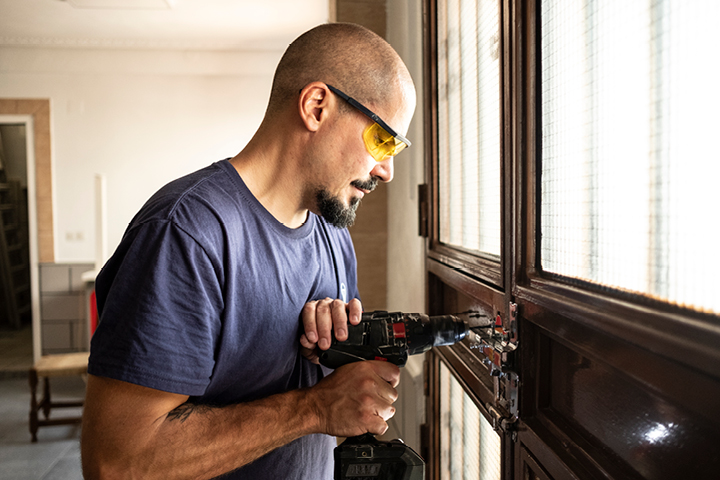
Build your future as a skilled locksmith. Help protect homes, businesses and sites using modern tools, technology and security systems. Gain practical skills to keep people and property secure.
Outcomes
What you'll gain
Learning outcomes
Through a mixture of theory and practical course work, learn to:
make and copy mechanical and electronic keys
service and repair mechanical locking systems
design and build master key systems
install door locks
gain legal entry to houses, commercial buildings, cars and safes
install and set up electronic access control, alarm and CCTV systems.
Course outcomes
Learn core skills that prepare you for opportunities in your chosen field.
A nationally accredited qualification at a certificate III level.
The ability to work as a qualified locksmith for a range of employers or by starting your own business.
The ability to provide security advice.
A highly valued technical skill set for employment in Australia and overseas.
Suitability
Is this course right for you?
Entry requirements
This course requires evidence of previous experience or study before you can enrol.
Apprenticeship
You must be employed as an apprentice in the industry.
Your Apprenticeship Connect Australia Provider (ACAP) must submit your Training Proposal Plan (TPP).
Visit our apprenticeships and traineeships page for more information.
Non-apprenticeship
You must be at least 21 years old as shown by your photo ID.
You must be currently working in industry and have at least 2 years’ experience, shown by your resume and confirmation from your employer.
You must meet Smart and Skilled eligibility criteria.
Completion requirements
During your study, you'll need to provide your teacher with the following evidence:
Entry recommendations
To be prepared for this course, we recommend that you have:
willingness to undergo a criminal record check to get a security licence
problem-solving skills
an aptitude for working with your hands to perform installations and repairs
teamwork and collaboration skills
effective communication
reliability
Language, Literacy and Numeracy (LLN) at a Year 10 high school level
access to a computer with a good internet connection
the ability to provide your own personal protective equipment (PPE) including eye, hearing and feet protection.
The following foundation skills
You can follow a routine and ask for help if you need it.
You can read everyday texts and find important information.
You can write short sentences or lists to share information.
You can do everyday maths like working out prices or reading a timetable.
You can speak clearly and explain your thoughts in a group.
You can turn on a digital device and follow simple steps.
Note:
TAFE NSW may ask you to complete a Language, Literacy and Numeracy (LLN) skills test. This helps us understand your individual study needs and design a personalised plan to support your study success.
We tailor our courses to meet local community needs, so some campuses may have extra entry requirements. Check your preferred location for details. Need help preparing? Contact us for support.
Find Your Fit
This simple tool guides you to a suitable course level based on your foundation skills and confidence.
Pathways
Future career and study options
Career pathways
Our graduates go onto roles like:
Locksmith
Locksmiths install and maintain locks and related security devices and systems.
Full-time share Full-time workers usually work 35 hours or more a week (in all their jobs combined).
90%
Employment size Employment size is the number of workers who do this as their main job.
1,000 workers
Average age This is the average age of all workers in this job.
38 years
Weekly pay Median earnings are shown for full-time, non-managerial employees paid at the adult rate, before tax or any amounts that are salary sacrificed. These figures are a guide to earnings only and should not be used to determine a wage rate.
$1,040
Average full-time The average full-time hours that people in this role work each week.
43 hours
Skill level rating Skill level ratings are based on the range and complexity of job roles. In general, the higher the skill level, the more formal education and training, previous experience or on-the-job training needed to be good at the job.
Medium
Gender share
4% female
Future growth The Department of Employment, Skills, Small and Family Business estimates the likely change in number of workers in this role, or industry, over the next 5 years. Future growth is the likely percentage change compared to all other job roles.
Strong Growth
Other jobs include: automotive locksmith specialist, safe technician, master key specialist and security electronics technician.
Licensing
To work in the industry, you’ll need to get a NSW Class 2C Security Equipment Specialist security licence. Visit Service NSW for more information.
Study pathways
Take your study further with other courses offered at TAFE NSW:
Previous study1 Course
Begin here to gain experience and confidence in this study area.
Further study1 Course
Advance your skills to take your career to the next level
Related study1 Course
Learn core skills that prepare you for opportunities in your chosen field.
Your experience counts
At TAFE NSW, we recognise your previous study and work experience. You can apply for recognition of prior learning or a credit transfer with any of our courses. If you're successful you'll get your qualification faster.
Units
Units taught in this course
Courses are made up of a combination of both core and specialty units. In the Certificate III in Locksmithing qualification, you’ll need to successfully complete 32 units of competency, including 12 core and 20 speciality units.
Please note, not all specialty units are offered at every TAFE NSW location. It is highly recommended that you check with your preferred campus for information about the specialty units offered at that location.
Core units - 12
Core units are central to the job outcomes of a particular industry or occupation. These are the units industry has agreed are essential to be capable and qualified at a particular study level.
Participate in environmentally sustainable work practicesMSMENV272
Work safely and effectively in manufacturing and engineeringMEM13015
Perform engineering measurementsMEM12023
Use hand toolsMEM18001
TAFE NSW services
Facilities and support
TAFE NSW provides support services across all campus locations and online. Whatever your needs or circumstances, we have the people, resources, counselling and facilities to support you in focusing on your studies.
TAFE NSW Disability Support Service
TAFE NSW Language, Literacy and Numeracy (LLN) support
TAFE NSW Aboriginal Support; Learner support (ABE)
TAFE NSW Careers, Counselling and Pathways Service
TAFE NSW Libraries
Scholarship programs - be supported as you explore your talents and fulfil your potential
Read&Write literacy and study support software is available free for all TAFE NSW students to use while studying on campus and at home
LinkedIn Learning - an online resource which offers innovative courses and tutorials to improve your personal and professional skills
Student associations - get social with our student community
Study options