Skip to main content![This banner image shows the devastation of a fire that has torn through an area of bushland. There’s a firefighter standing in the middle of the image.]()


- Go to homepage
- Specialty Schools
- National Centre for Emergency Management Studies
National Centre for Emergency Management Studies

The National Centre for Emergency Management Studies (NCEMS) trains you to handle different emergencies. You’ll learn how to respond to crises such as floods, bushfires, storms, biosecurity threats and pandemics.
Our training covers the 4 key phases of emergency management: prevention, preparedness, response and recovery. This helps you manage risks and keep communities safe. Call 02 7920 8831 or email us to find out more.
Tailored training
At NCEMS, we offer professional development and accredited courses in crisis management and public safety. These meet your needs and include group enrolments with tailored programs and practical training led by experienced instructors.
Our courses run at different times throughout the year and can also be delivered on demand. Course lengths range from 8 hours to 10 weeks. To find out more, please enquire about the course you want to study.
Take the next step
Public Safety (Emergency Management)
Advanced Diploma
Advance your career in emergency management and develop key practical skills and knowledge through a blend of online and face-to-face learning. Become a leader of incident, emergency and disaster response in your community and organisation.
Course options
Manage the Public Information at an Incident
Statement of Attainment
Grow your role in an incident management team. Build the skills to create timely, targeted public information during a crisis.
Australasian Inter-service Incident Management System (AIIMS)
Course
Prepare for emergency situations and develop the skills to support your business or community. Build confidence in managing incidents using the Australasian Inter-service Incident Management System (AIIMS).
Exercise Management for Emergencies
Statement of Attainment
Learn how to design, deliver and test a simulated scenario exercise. This training is essential for anyone responsible for community safety, staff training or keeping services running during an emergency.
Introduction to Emergency Management
Statement of Attainment
This course is an introduction or refresher for those working in the sector. You’ll learn how to apply emergency management principles and local plans to guide your organisation’s operations.
Planning for Complex Incidents
Statement of Attainment
This course covers the roles and responsibilities of the Planning Section under the Australasian Inter-service Incident Management System (AIIMS). It’s suitable for those in high-risk industries or emergency management.
Coordinate Emergency Planning
Statement of Attainment
Do you work with communities or the emergency management sector to plan for disasters? Planning is essential for preparing for emergencies. This unit gives you the skills to undertake effective emergency planning.
Manage Recovery Functions and Services
Statement of Attainment
Develop the skills to manage recovery activities and services after an emergency. Topics include financial assistance, personal support, health services, rebuilding programs and supporting businesses to continue operating.
Prepare High-Level Written Communication
Statement of Attainment
Learn to write business cases, grant applications, policies, media releases and ministerial responses. Gain experience creating plans and instructions to support emergency management organisations during a crisis.
Working with Spontaneous Volunteers
TAFE Statement
Learn how to support volunteers who help during a disaster. Get practical tools and skills to engage, organise and provide opportunities for community volunteers.
Volunteer support
Volunteers are vital to emergency services and support communities during crises. NCEMS offers flexible, easy-to-access training, including many non-accredited courses for volunteers.
Volunteers are the backbone of emergency management. To get involved, contact:
- Regional NSW planning and strategic resources
- NSW Rural Fire Service (NSW RFS)
- State Emergency Service (SES)
- Disaster Relief Australia
- NSW emergency volunteering
For course information or questions, call 02 7920 8831 or email us.

Help for regional communities
Towns in regional NSW face unique challenges that make emergencies more likely. This puts pressure on local economies and affects businesses and livelihoods.
Studying emergency management at NCEMS helps you support your community during crises.
Our training gives you the skills to:
- respond effectively to crises
- help with recovery efforts
- protect the overall quality of life in regional communities.
Environmental responsibility
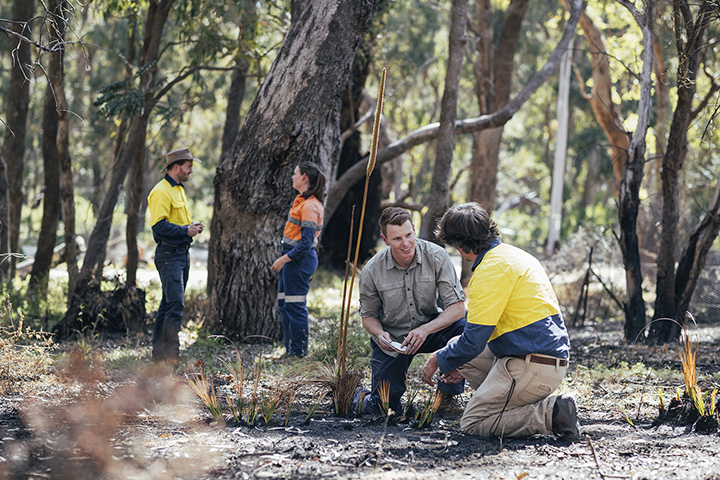
As technology changes education and business, environmental sustainability is key in emergency management.
At NCEMS, we include an environmental strategy in our programs that meets stakeholder needs while protecting natural resources for the future. We address immediate crises alongside long-term environmental health.
Our approach makes sure emergency management supports both today’s and tomorrow’s needs. By balancing emergency responses with sustainability, we prepare you to manage emergencies responsibly.