Skip to main content

National code: CUA30720
Certificate III in Design Fundamentals at Design Centre Enmore
Course information
Type
On campusLearn in a face-to-face environment at a TAFE NSW campus.
Focus
Design FundamentalsCourse specialisation
Schedule
Full Time16+ hours per week.
Duration
3 daysTime required to complete this course.
Start date
18 Jul 2022First day of attendance online or on campus.
End date
2 Dec 2022Final day of attendance online or on campus.
Class details
Location
Class time
20 hoursDedicated hours required each week in either online or on campus classes.
Additional study time
18 hoursThe minimum recommended hours you will need to commit to your studies outside of class hours. This may include private study, work placements and research.
Register interest
This course is currently closed. Register your interest to be notified when you can apply for this course.
Course fees
$---
Fee pending
Course fees are released each semester. We'll confirm your fee before enrolment.
Proposed timetable
What time classes run
The timetable is indicative only- days could be Monday, Tuesday, Wednesday or Tuesday, Wednesday, Thursday or Wednesday, Thursday, Friday depending on teachers and workshop availability.
Additional information
Other things to know
Assessments
Assessments let you show what you've learned and check what you may need to work on.
Knowledge assessments: research tasks, assignments
Skills assessments: projects, case studies
Practical skills assessments: industry-relevant design practice activities
Portfolio of work
Work placement
Work placement gives you real experience and develops your skills.
There is no work placement for this qualification.
Materials needed
To complete this course, the following materials are required:
Stationery required: A pen for writing notes, fine tip permanent, Fine felt tip pen / Artline, 30cm metal ruler, eraser, sharpener, pencils: HB, B, H, mechanical pencil with .05 or .03 leads, compass that holds a pencil, A4 notebook, 2 x A4 plastic sleeve folder (cheap from supermarket- to hold briefs/notes), A4 visual diary In addition to your course fee, there will be additional ongoing material costs for metal, gems and tools. Depending on the type of materials, this could be from $50 to $100. All tools are loaned to students for one semester, however it is the student's responsibility to replace any lost or damaged tools.
Additional entry requirements
To make sure this delivery option is the right fit for you, we will need you to demonstrate that you can meet the additional requirements below.
The timetable is indicative only- days could be Monday, Tuesday, Wednesday or Tuesday, Wednesday, Thursday or Wednesday, Thursday, Friday depending on teachers and workshop availability
Units
Units taught in this course
Courses are made up of a combination of both core and specialty units. In the Certificate III in Design Fundamentals qualification, you’ll need to successfully complete 12 units of competency, including 7 core and 5 speciality units.
Core units - 7
Core units are central to the job outcomes of a particular industry or occupation. These are the units industry has agreed are essential to be capable and qualified at a particular study level.
Apply work health and safety practicesCUAWHS312
Produce creative workCUAPPR311
Follow a design processCUADES201
Produce drawings to communicate ideasCUAACD311
Course delivery
Studying on Campus
Learn in person, on a TAFE NSW campus. Depending on your course, your classroom could include purpose-built spaces like art studios, mechanical workshops, laboratories or bakeries. When you study on campus, you will receive a timetable of when you need to be on campus to attend.
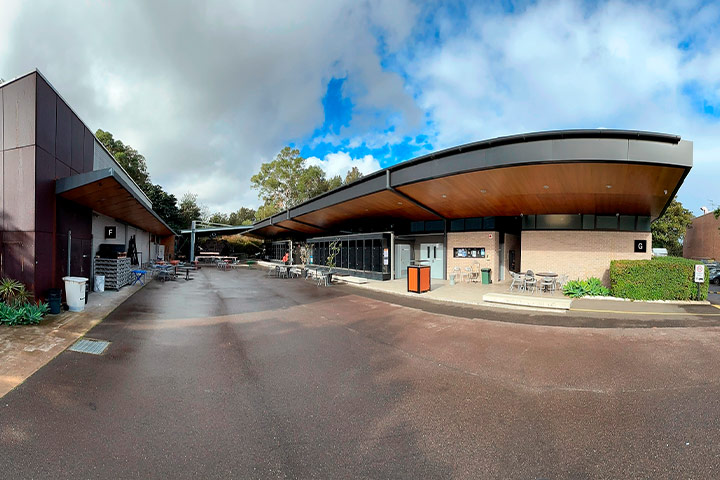
Design Centre Enmore
Campus facilities
Free parking
Bike racks
Library
Canteen
Student kitchenette
Accessibility and inclusion
Accessible parking
Accessible toilet
Aboriginal learner support centre
We’re here to help
Get help with almost every part of student life. From study support and resources to counselling and finding jobs or accommodation.
- Disability and access support
- Counselling and careers
Student services
Contact us
Mon|8am - 6pm
Tue|8am - 6pm
Wed|8am - 6pm
Thu|8am - 6pm
Fri|8am - 6pm
Sat|Closed
Sun|Closed